






Working memory plays a central role in how we think, learn, and stay focused. It helps us temporarily store and process information while performing everyday tasks such as reading, planning, solving problems, and making decisions.
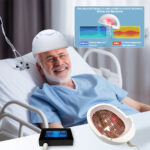
As interest in brain wellness continues to grow, red light therapy and near-infrared light therapy are increasingly being explored for their potential cognitive benefits. In particular, researchers studying transcranial photobiomodulation (tPBM) have investigated whether specific wavelengths of light applied to the head may help support working memory, attention, and overall cognitive performance. Current research is promising, especially in older adults, but the field is still developing and stronger large-scale evidence is still needed.
What Is Working Memory?
Working memory is the brain’s ability to hold and manipulate information over a short period of time. It is essential for:
- concentrating on tasks
- following instructions
- mental calculation
- reading comprehension
- learning new information
- decision-making and planning
Because working memory is closely linked to mental performance, it is often used as a key outcome in cognitive research.
What Is Red Light Therapy for Brain Function?
When red light therapy is discussed in relation to cognition, it usually refers to photobiomodulation, a non-invasive approach that uses red or near-infrared light to stimulate biological processes in tissues. In brain-related applications, near-infrared wavelengths are especially common because they are generally considered better suited for deeper tissue penetration than visible red light.
Researchers believe photobiomodulation may influence the brain by supporting mitochondrial activity, cellular energy production, blood flow, and other neurophysiological processes. These proposed mechanisms are one reason why tPBM is being investigated for memory, attention, and age-related cognitive decline.
Can Red Light Therapy Improve Working Memory?
The most balanced answer is: it may help, but results can vary.
A growing number of studies suggest that transcranial photobiomodulation may improve working memory and related cognitive functions in certain groups. A 2022 study found that seven days of repeated tPBM improved working memory in healthy older adults, with benefits that lasted for at least several weeks.
Other studies have also reported positive effects on attention, frontal-lobe cognitive performance, and cognitive efficiency in older adults. A 2024 randomized, double-blind, placebo-controlled trial in adults over 50 reported cognitive improvements along with increased serum BDNF levels after tPBM.
There is also evidence from human research that tPBM may improve visual working memory capacity, especially when targeting the prefrontal cortex.
At the same time, review papers continue to emphasize an important limitation: protocols vary widely across studies, including wavelength, dose, treatment frequency, target area, and patient population. That makes it difficult to draw definitive conclusions across all device types and users.
Why Is This Area Getting So Much Attention?
The reason is simple: cognitive wellness is becoming a major part of the broader health and wellness market.
Consumers and brands are increasingly interested in technologies that may support:
- focus and concentration
- mental clarity
- healthy aging
- executive function
- recovery and brain wellness routines
This growing interest makes brain-focused light therapy an appealing category for OEM/ODM development, especially for brands already active in wellness, rehabilitation, recovery, or healthy aging products.
How Might Red Light Therapy Support Brain Function?
Although research is still ongoing, photobiomodulation is thought to work through several possible pathways, including:
- supporting mitochondrial energy production
- influencing blood flow and oxygen utilization
- helping regulate oxidative stress
- affecting neural activity in areas involved in attention and memory
These mechanisms are still being studied, but they help explain why tPBM is being explored in cognitive applications rather than only in skincare, recovery, or pain relief.
Device Design Matters More Than Many People Realize
Not all red light devices are suitable for cognitive or head-use applications. From a product development perspective, device design is critical.
1. Wavelength Selection
Brain photobiomodulation research commonly involves red and near-infrared wavelengths, often in ranges such as around 660 nm, 810 nm, 850 nm, or 1064 nm, depending on the protocol and intended application.
2. Output Stability and Dosimetry
In photobiomodulation, more power is not always better. Consistency of irradiance, treatment time, and total delivered energy is important. Reviews note that the lack of standardized dosimetry remains one of the main challenges in the field.
3. Target Area
Many cognitive studies focus on the prefrontal cortex, especially the forehead area, because of its role in working memory, attention, and executive function. Device structure, fit, and treatment geometry can therefore directly affect usability and consistency.
4. Comfort and Safety
For home-use or wearable products, thermal control, ease of use, and comfort are essential. Reviews in older adults describe PBM as promising and generally well tolerated, but long-term protocol optimization still needs further study.
Who May Benefit From This Product Category?
From a market perspective, devices positioned around brain wellness and cognitive support may be relevant to:
- healthy aging brands
- wellness technology brands
- recovery and rehabilitation suppliers
- sleep and stress management product lines
- brands looking for a differentiated PBM product concept
For B2B buyers, the opportunity is not only in the light source itself, but also in the full solution: industrial design, fit, firmware logic, timing control, safety, and documentation.
Important Limitations to Keep in Mind
This is where responsible positioning matters.
Current evidence does not prove that red light therapy will improve working memory for everyone. Many studies are still relatively small, use different methodologies, or focus on specific populations such as older adults. Systematic reviews consistently suggest that photobiomodulation is promising, but more standardized and larger clinical trials are needed.
That means brands should avoid overstating claims. In most markets, the safer commercial positioning is around:
- cognitive wellness support
- mental performance support
- brain wellness technology
- healthy aging support
rather than strong disease-treatment language, unless the product has the required regulatory pathway and evidence for those claims.
How to Choose the Right Device
If you are evaluating a red light or near-infrared device for brain wellness applications, consider the following:
- Are the wavelengths aligned with current PBM research?
- Is the output stable and well controlled?
- Is the design suitable for head or forehead application?
- Are treatment duration and dose clearly defined?
- Is the device comfortable enough for repeated use?
- Can the supplier support OEM/ODM customization and documentation?
For brands, a strong product is usually one that combines scientific logic, reliable hardware, user comfort, and responsible positioning.
Final Thoughts
So, can red light therapy improve working memory?
Based on current research, transcranial photobiomodulation shows real promise as a supportive technology for working memory and cognitive performance, especially in aging-related wellness applications. However, the science is still evolving, and product claims should remain measured and evidence-aware.
For brands and distributors, this makes brain-focused light therapy a compelling emerging category. With the right device design, positioning, and manufacturing support, it can become a differentiated product line in the growing wellness and healthy aging market.
Looking to develop or source red light and near-infrared devices for wellness applications? Contact us for OEM/ODM solutions tailored to your brand.