Categories
Featured products
News

Laser Hair Growth Cap vs. Red Light Hair Growth Cap: Which Is Right for Your Business?
Introduction The global market for hair growth and scalp care devices is expanding rapidly, creating new opportunities for distributors, wholesalers and beauty brands. Among the most popular wearable solutions are laser hair growth caps and red light LED hair growth caps. Although they look similar, the two technologies differ in light source, product positioning, manufacturing…

B2B Sourcing Guide: Commercial Differences Between Professional and Budget Red Light Therapy Panels
Executive Summary: For wellness brand owners, medical distributors, and wholesale buyers, navigating the red light therapy (RLT) supply chain requires strict technical scrutiny. While cheap panels dominate low-end retail, professional-grade panels justify their manufacturing cost through superior irradiance, spectral accuracy, EMF safety, and modular scalability. This guide breaks down the critical metrics required to successfully…
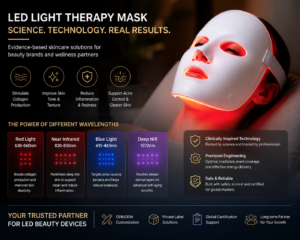
B2B Sourcing Guide: How to Select and Customize High-Performance LED Beauty Masks
Executive Summary: For beauty brand owners, wholesalers, and clinical distributors, sourcing the right LED beauty mask is a balance of scientific efficacy, regulatory compliance, and manufacturing precision. This comprehensive guide analyzes the core technology of Photobiomodulation (PBM) , key technical parameters (wavelengths, irradiance) , and safety standards to help you make informed B2B procurement decisions.…

10 Key Factors That Determine the Effectiveness of LED Light Therapy Masks
Introduction The global demand for LED light therapy masks has grown rapidly as consumers and beauty brands look for non-invasive skincare solutions based on photobiomodulation (PBM) technology. However, not all LED masks deliver the same performance. Many products compete by highlighting the number of LEDs, but the real effectiveness of an LED light therapy mask…
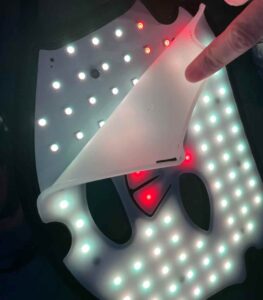
High-End LED Face Masks vs Low-Cost Models: What’s the Real Difference?
Introduction In the global LED light therapy market, many products may look similar from the outside. However, when it comes to performance, stability, and long-term results, the internal engineering structure determines everything. For B2B buyers, distributors, and private label brands, understanding these differences is critical before selecting an OEM/ODM manufacturing partner. This article explains the…
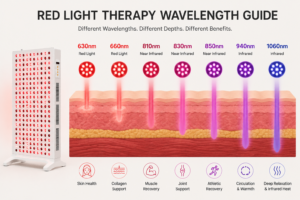
Red Light Wavelength Guide (630nm–1060nm): Understanding Different Wavelengths in Red Light Therapy
Red light therapy devices are widely used in wellness, recovery, skincare, and biohacking applications. One of the most important factors that determines performance is wavelength selection. Different wavelengths penetrate the skin and tissues at different depths and create different biological responses. Understanding these differences helps users and OEM buyers choose the right red light therapy…

Why LED Face Mask Eye Pads Fall Off & How OEM Manufacturers Improve Structural Durability
Eye Pad Durability Problem in LED Face Masks In the LED face mask and red light therapy beauty device industry, product performance alone is no longer enough. Global buyers, especially brand owners, distributors, and OEM/ODM clients, are increasingly concerned about long-term durability, structural stability, and after-sales reliability. During our manufacturing and product development process, we…
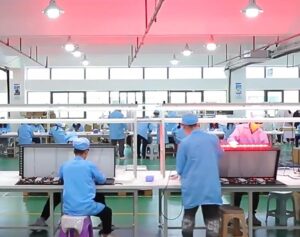
What Is the Red Light Therapy Supply Chain Structure?
Complete OEM Guide for Wellness Brands & Distributors Introduction Red light therapy devices such as LED face masks, red light panels, and wearable recovery systems are widely used in beauty and wellness markets. However, most buyers only see the finished product — not the system behind it. In reality, the red light therapy industry is…
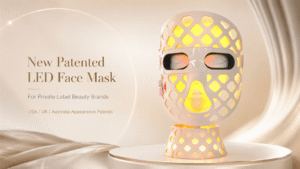
New Patented LED Face Mask for Private Label Beauty Brands
New Patented LED Face Mask for Private Label Beauty Brands SWIDA is introducing a new patented LED face mask designed for private label beauty brands, skincare companies, distributors, salons, spas, and wellness businesses looking for a more differentiated LED beauty device. As the LED face mask market becomes increasingly competitive, many brands are looking beyond…
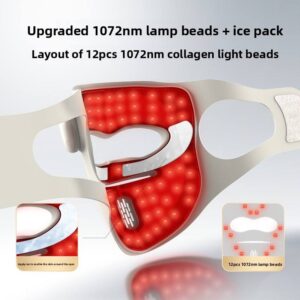
New 1072nm LED Face Mask for Private Label Beauty Brands
SWIDA is introducing a new 1072nm LED face mask designed for private label beauty brands, skincare retailers, distributors, salons, spas, and wellness businesses looking to expand their home-use beauty device product lines. As the LED beauty device market continues to grow, more brands are looking for differentiated products beyond traditional red and blue light masks.…