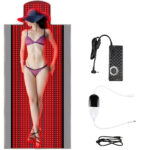
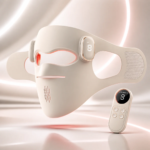
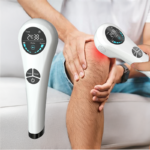



Executive Summary: For wellness brand owners, medical distributors, and wholesale buyers, navigating the red light therapy (RLT) supply chain requires strict technical scrutiny. While cheap panels dominate low-end retail, professional-grade panels justify their manufacturing cost through superior irradiance, spectral accuracy, EMF safety, and modular scalability. This guide breaks down the critical metrics required to successfully evaluate your RLT manufacturing partners.
1. Manufacturing Integrity and Safety: The Critical EMF Factor
When auditing an OEM/ODM factory, product safety compliance is your first line of defense against consumer liability.
The Budget Hazard: Low-cost RLT panels typically utilize cheap plastic housings, loud cooling fans, and inferior internal wiring. More importantly, they frequently lack appropriate grounding, causing the device to emit high levels of Electromagnetic Field (EMF) radiation during use, creating a health hazard for the end consumer.
The Professional Standard: High-end commercial panels are built with premium materials (such as robust metal enclosures) that damp fan noise. They utilize specialized DC-converted (Direct Current) internal architecture specifically designed to guarantee near-zero EMF radiation levels even during close-proximity sessions.
2. Optical Irradiance and Effective Treatment Distance
Product efficacy determines customer retention and brand reviews. The core metric here is irradiance (light power density).
The Deficit of Cheap Units: Many mass-market suppliers falsely advertise effective spectrums while equipping devices with underpowered LED chips (e.g., a true output of only 4 watts per diode). Consequently, the light energy decays exponentially over short distances, forcing users to press the unit directly against their skin to receive any therapeutic dose.
The Commercial Grade Advantage: Professional panels offer true, high-density optical output, achieving verified irradiance levels of 80-90 mW/cm² at a 6-inch distance. This high power ensures deep dermal and subcutaneous penetration, dramatically shortens required treatment times, and allows consumers to sit or stand at a comfortable distance while receiving clinical-grade energy dosages.
3. Wavelength Precision & Multi-Wavelength Blending Tech
Photobiomodulation (PBM) relies entirely on specific, clinically validated nanometer targets.
Wavelength Bleeding in Budget Units: Low-tier manufacturers generally offer only standard 660nm (Red) and 850nm (Near-Infrared) options. Due to substandard chip sorting and loose quality control, these devices experience severe wavelength “bleed-through,” emitting impure frequencies that diminish biological response.
Multi-Chip Integration in Premium Units: Professional-tier suppliers can integrate 5 to 7 precise, clinically proven wavelengths simultaneously (such as a matrix of 630nm, 660nm, 810nm, 830nm, 850nm, alongside anti-inflammatory 590nm Amber light and deep-penetrating 1060nm Near-Infrared). Furthermore, premium manufacturers leverage Multi-chip LED technology, embedding multiple wavelength dies inside a single lens to ensure perfectly homogeneous light blending across the target tissue area.
4. Advanced Smart Controls and Scalable Modular Architecture
To capture premium market share, your product line must offer advanced user experiences and scalability.
Smart Interface Customization
While budget panels offer nothing more than a basic manual on/off rocker switch, professional panels act as smart home appliances. They feature interactive touchscreens, dedicated mobile App controls, preset clinical protocols, customizable session timers, variable pulse frequency adjustment, and digital dimming capabilities to regulate specific wavelength intensities.
The Modular “Daisy-Chaining” Advantage
For wholesalers selling to commercial gyms, spas, or clinic environments, look for hardware that supports Daisy-chaining / Zero-gap design. This allows multiple panels to interlock physically and electronically, enabling them to be controlled synchronously via a single master control panel. This creates a seamless upgrade path for clients wishing to expand smaller units into full-body light therapy setups.
5. Supply Chain Transparency: Data Verification and Warranties
Partnering with an untrusted supplier can expose your business to high defect rates and poor after-sales support.
| Sourcing Metric | Budget Factory / White-Label | Professional OEM / Established Brand |
| Data Integrity | Highly susceptible to inflated or falsified power metrics. | Actively publishes verification data from independent third-party labs. |
| Warranty Terms | Standard 1-year limited warranty; minimal technical support. | Comprehensive 3+ year warranties with dedicated hotlines. |
| Component Lifespan | High failure rate due to substandard thermal management. | Long-lasting commercial duty cycles due to metal housings and active cooling. |
Conclsion
Sourcing low-cost panels may offer temporary pricing advantages on paper, but the associated compliance risks, high return rates, and lacking efficacy can devastate a growing brand. Investing in an OEM partner that prioritizes verified optical engineering, low-EMF shielding, and intelligent modular features is the most reliable strategy to secure high-margin, commercial B2B success.
This is precisely where SWIDA delivers. Designed with medical-grade DC-converted zero-EMF engineering, high-density irradiance, and zero-gap daisy-chaining scalability, SWIDA’s professional red light therapy panels meet every rigorous standard required for long-term brand equity. Partner with SWIDA today to upgrade your product portfolio with verifiable performance and uncompromising safety.
Disclaimer: This article is intended solely for B2B procurement and supply chain informational purposes, and does not substitute for regulatory legal advice or medical certification guidance.